
Bank Reconciliation
Bank Reconciliation doesn’t have to be a manual headache. With FiChecks, your business can automate transaction matching, flag discrepancies in real-time, and close books faster. Our platform connects seamlessly with your bank feeds and accounting software to reduce human error and save hours of administrative work each month. Whether you manage a growing startup or a multi-entity enterprise, FiChecks adapts to your workflow and scales as you do.

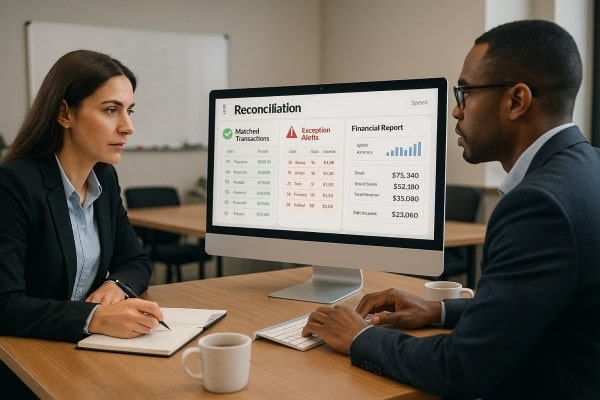
Faster Closures and Accurate Reporting
Keeping your financials up to date is critical. FiChecks streamlines reconciliation by auto-matching deposits, withdrawals, and journal entries while giving your team a centralized view of unresolved transactions. You can set custom rules, track exceptions, and generate clean audit trails, helping you close your books accurately and on time. That means less time chasing inconsistencies and more confidence in your numbers.
Built for Teams That Need Transparency
From accountants to CFOs, everyone benefits from visibility. FiChecks gives your entire finance team a collaborative environment where reconciliations can be reviewed, annotated, and approved without email threads or spreadsheet versions. With role-based permissions and real-time alerts, no transaction slips through the cracks. It’s a bank reconciliation experience designed for clarity and control.

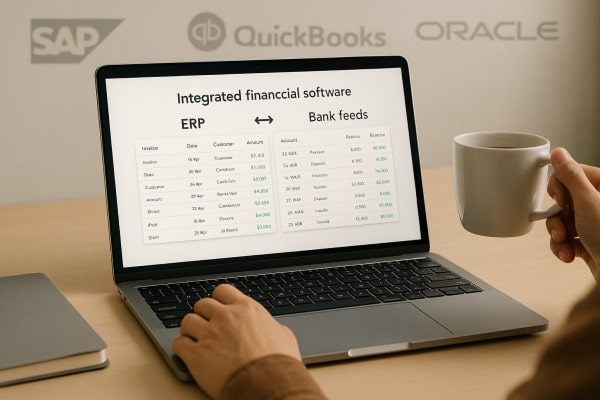
Integrate, Automate, and Move Forward
FiChecks works with leading ERP and banking platforms to keep data in sync. By eliminating repetitive tasks, your team can focus on strategy instead of spreadsheets. From daily reconciliations to monthly reporting, FiChecks ensures your books are clean and your processes are compliant. Upgrade from manual methods and discover a better way to manage bank reconciliation that grows with your business.
Frequently Asked Questions
What is the purpose of bank reconciliation in accounting?
Bank reconciliation helps ensure that the balances in your accounting records match your actual bank statements. It identifies discrepancies such as missed entries, duplicate transactions, or errors. Tools like FiChecks make this process much faster and more accurate.
How often should businesses perform bank reconciliation?
Most businesses reconcile their bank accounts monthly, though high-volume operations may do it weekly or daily. With FiChecks, you can automate this on a schedule that fits your needs and receive alerts whenever anomalies arise.
What are common problems during reconciliation?
Some of the most common issues include timing differences, data entry errors, or missing transactions. FiChecks helps resolve these by automatically flagging mismatches and guiding users through resolution steps.
Bank Reconciliation vs Bank Statement Matching
While both are comparisons of financial entries, bank reconciliation is a more advanced function that verifies all cash transactions are correctly in your books and bank account. Bank statement matching is typically the matching of bank statement lines with particular invoices or receipts. Reconciliation is viewing the cash position, whereas statement matching is transaction-oriented. For multiple-account or high-volume teams, FiChecks automates both processes with workflow and minute-level tracking.