
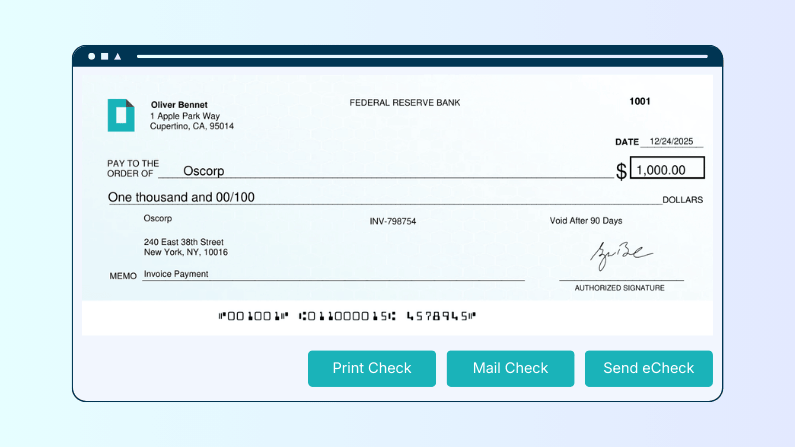
Check payments are one of the oldest and most trusted ways to send money. Many businesses and individuals still use them today because checks offer control, clear records, and broad acceptance.
Many businesses still turn to checks for payments. Whether it’s paying a supplier, giving a refund, or sorting payroll, checks just work. In this guide, we’ll show how checks work, why companies still use them, and how FiChecks makes the whole process simpler.
What Is Check Payment and Why It Still Matters
Check payment refers to a method of transferring money using a written or digital check that instructs a bank to pay a specific amount to a recipient. It is a formal payment instrument that has been used for decades in business and personal finance.
A lot of vendors still like getting checks because they’re easy to handle and leave a clear record. Businesses also use checks to keep better control of their cash since the money doesn’t leave the account right away. That makes checks really handy for keeping finances organized and planning ahead.
Even in a digital world, check payments continue to play a role in B2B transactions, vendor settlements, and corporate finance operations.
How Check Payment Works in Simple Terms
At its simplest, a check lets the bank know who to pay and how much. The payer creates a check with the recipient’s name, the amount, and a signature. The recipient then deposits the check, and the bank transfers the funds.
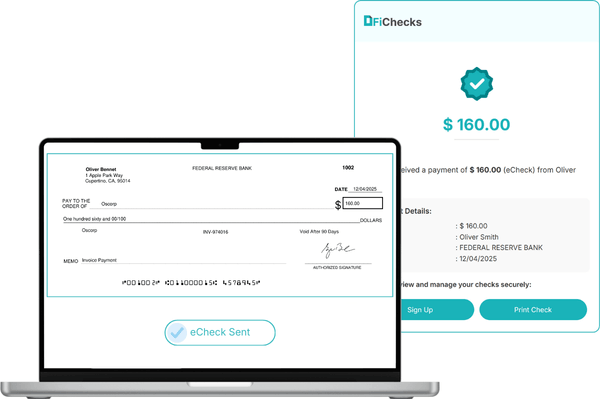
You can now create and send checks online instead of using paper. These eChecks feel like regular checks but are quicker and much easier to manage.
For businesses, it’s straightforward. Make the check, send it to the recipient, and let the bank handle the rest. This straightforward flow is one reason checks are still widely used in professional settings.
Key Benefits of Using Check Payment
If you like keeping payments simple and under control, checks can still make life easier.
One major benefit is payment control. Checks let businesses schedule payments without money leaving the account immediately, which helps with budgeting and planning.
Another benefit is record keeping. Every check leaves a clear record showing the date, amount, and recipient. Every check keeps things clear so finance teams don’t have to worry about audits or reports.
Security is also important. Checks require authorization and verification, which reduces unauthorized spending. Businesses can also stop or cancel checks if needed, adding another layer of control.
Compatibility is another reason checks are widely used. Many vendors, suppliers, and contractors still accept checks as a standard payment method, especially in B2B transactions.
Finally, check payments simplify reconciliation. Matching payments with invoices becomes easier when each transaction has a reference and documented history.
Common Business Use Cases for Check Payment
Check payment is used in many everyday business operations. Companies often pay their vendors and suppliers with checks. This is especially common in manufacturing, retail, and professional services.
Payroll is another common use case. Some businesses still pay employees by check, especially in regions or industries where digital payroll is not widely used.
Refunds are also commonly issued via check. Businesses send checks to customers for returns, overpayments, or reimbursements.
You can also use this to pay contractors and freelancers. Many contractors prefer checks for documentation and tax purposes.
In B2B transactions, checks are frequently used for large invoices, recurring vendor payments, and intercompany settlements. The structured nature of check payments makes them suitable for corporate finance workflows.
How FiChecks Modernizes Check Payment and Money Transfers
FiChecks makes check payments simple while supporting multiple ways to send money. Instead of manual processes, businesses can handle all payments from one easy platform.
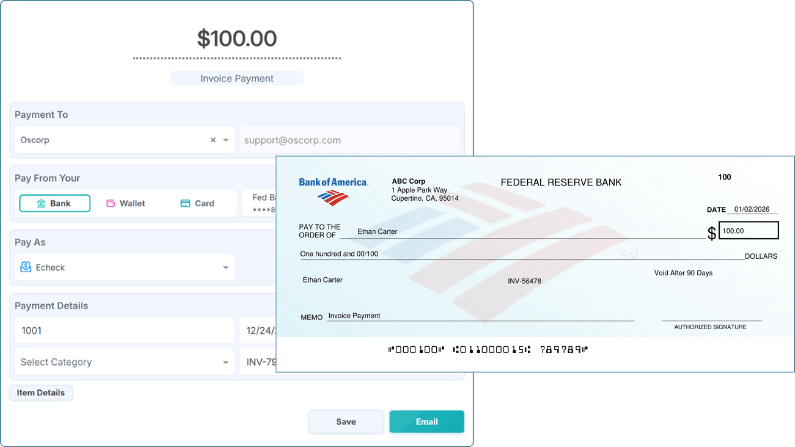
With FiChecks, you can create checks online and print them right away. There is no need for pre printed check stock or handwriting checks by hand.
Users can send checks by email as eChecks, so recipients can receive and deposit payments faster. If a vendor prefers paper checks, FiChecks can mail them via USPS or FedEx, saving time and reducing admin work.
FiChecks supports more than just checks. Businesses can also use ACH, wire transfers, and digital wallets, so they can pick the best payment option for each situation.
FiChecks lets teams manage different payment methods in one place, so they do not have to switch between tools or deal with complicated processes.
Why Businesses Benefit from a Multi Payment Approach
Using only one payment method can slow things down. Some vendors prefer checks, others like bank transfers, and some want fast digital payments.
Using a platform that supports check payment alongside ACH, wires, wallets, and cards allows businesses to adapt to different partner preferences. This improves vendor relationships, speeds up transactions, and reduces administrative friction.
It also helps with cash flow management. Businesses can control when and how payments go out while keeping detailed records of every transaction.
Best Practices for Managing Check Payment Efficiently
Keeping good records for every check you issue makes managing payments much easier. When you track the check number, date, and who received it, reconciling accounts and audits become straightforward.
Always use a secure system to create and send checks, so your payments stay safe. Digital platforms help reduce mistakes and make the process more accurate than writing checks by hand.
Go through your outstanding checks from time to time and match them with your bank statements. It keeps your records tidy and helps you catch issues before they become bigger problems.
The Future of Check Payment in a Digital Finance World
Even as digital payments grow, checks are not going away anytime soon. Many businesses still use them for organized payments, compliance needs, and vendors who prefer or require checks.
Checks are going digital, and businesses do not have to give up their old workflows to keep up. FiChecks brings traditional check payments into modern finance tools, making the transition simple and smooth.
Conclusion: Modernize Your Check Payment Process with FiChecks
Check payments are still a reliable and practical option for businesses and individuals. They give you more control, clear records, and wide acceptance that many organizations still rely on.
With FiChecks, businesses can modernize how they handle check payments while also accessing ACH transfers, wire transfers, digital wallet payments, and card payments in one platform. The ability to create checks online, print them instantly, send eChecks by email, or mail checks through USPS or FedEx makes payment management simple and flexible.
With FiChecks, businesses can simplify global payments, get a clear picture of their money, and manage transactions with confidence as finance continues to evolve.