

Digital payments have quietly become the backbone of how money moves today. Whether you are running a growing company, managing accounts for a mid sized business, or simply paying bills online, you are already part of this shift. The days of relying only on paper checks and in person banking are fading. Speed, convenience, and visibility now matter more than ever.
For businesses, digital payments are no longer optional. Vendors expect faster settlements. Contractors want timely payouts. Customers prefer simple online payment options. Finance teams also need simple records and better control over money coming in and going out. A good payment system makes everything easier, saves time, and helps manage cash flow.
In simple terms, digital payments refer to transferring money electronically instead of using physical cash. That includes bank transfers, online checks, card transactions, and wallet based payments. The goal is straightforward: move money securely and efficiently from one party to another.
How Digital Payments Work in Simple Terms
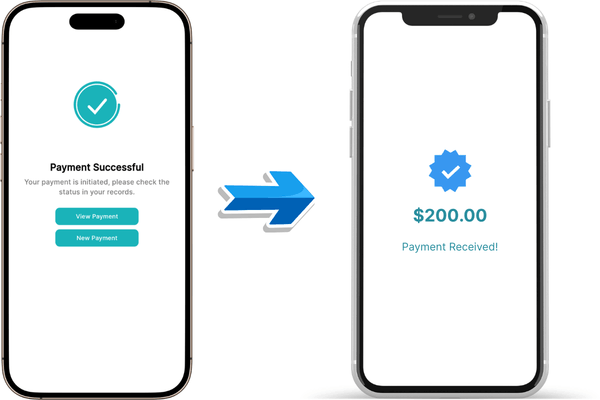
Digital payments are straightforward. You approve the transaction, it gets processed, and the record is saved automatically.
For example, when a business sends an ACH payment to a supplier, the details go through the banking network, get verified, and the money moves electronically. With card payments, the card network takes care of approval and settlement, while digital wallets transfer funds straight from an already loaded balance.
What really sets digital payments apart is how much smoother everything feels. There is no printing checks, no waiting on the mail, and no stacks of paperwork to sort through. Every payment leaves a clear record automatically, so tracking, reporting, and reconciling take far less time and effort.
Different Types of Digital Payments
There is no single rule for sending money electronically. Businesses usually go with whatever makes the most sense at the time, and it is common to use different methods depending on who they are paying and how quickly it needs to get done.
ACH payments are commonly used for vendor payments, payroll, and recurring bills. They are cost effective and reliable for routine transfers.
Wire transfers are usually the go to option when money needs to move fast or when the amount is significant. They are often used for big domestic or international payments when speed and reliability are important.
Digital wallets let users add money to a balance and pay instantly from it. It works quickly, stays flexible, and helps you avoid sharing bank details every time you make a payment.
Card payments are still a favorite for shopping online or in person. They are easy for customers to use and give businesses fast approval, so everything moves along without delays.
Online checks are another form of digital payments. Rather than filling out a paper check and putting it in the mail, businesses can send it online and skip the usual back and forth.
Every payment method has its place. The best mix really comes down to your cash flow, how much you are sending, and how quickly the money needs to arrive.
Real World Use Cases for Businesses
In day to day operations, digital payments solve real challenges.
Vendor payments are one of the most common use cases. Instead of mailing checks and waiting to hear back, businesses can send ACH or wire payments straight away. This builds stronger vendor relationships and prevents late fees.
Contractor payouts and payroll processing also benefit from electronic transfers. Teams receive funds on time, and finance departments avoid the manual work of printing and distributing paper checks.
Refunds and reimbursements are faster with digital payments. When customers receive their money quickly, trust improves. You can handle employee reimbursements internally without unnecessary paperwork.
You can set up subscriptions, rent, or service payments once and let them take care of themselves. This reduces the risk of missed payments and simplifies monthly planning.
Remote transactions have become standard. Businesses work with partners and clients across different states or countries. Digital payments remove geographic barriers and make remote collaboration seamless.
How FiChecks Supports Modern Digital Payments
When payment requirements expand, businesses benefit from having choices. FiChecks provides flexible payment options in a single system.
FiChecks makes sending money feel a lot less complicated. Instead of switching between different tools for checks, ACH, or wires, you can take care of it all in one place and move on with your day.
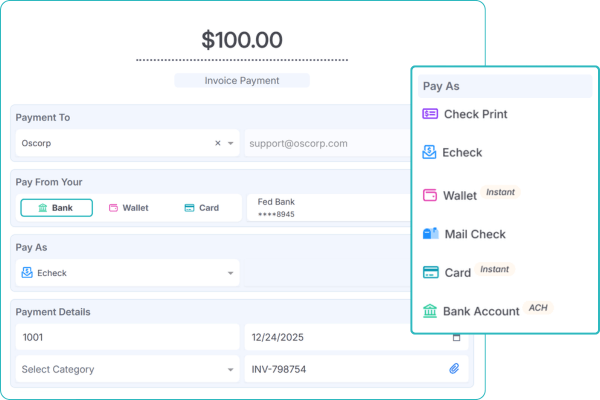
With FiChecks, users can create checks online in minutes. A physical check can be printed instantly whenever one is required. For faster delivery, send it by email as an eCheck. Prefer a more traditional approach? Mail checks directly from the platform using USPS or FedEx.
FiChecks does more than just checks. You can use ACH for regular payments and send a wire when something needs to go out fast or involves a larger amount. For quicker internal or balance based transfers, digital wallet payments are available. The platform supports card payments, giving businesses another way to transact.
This variety matters. Some vendors prefer ACH. Others still request checks. Certain transactions require wires. FiChecks gives finance teams the flexibility to choose the payment method that fits each situation best.
Control, Visibility, and Simplicity
One of the biggest advantages of digital payments is control. You can schedule, track, and document transactions. Teams can set up internal approval workflows to prevent errors.
With FiChecks, businesses can maintain clear records of every payment type. Instead of switching between different systems, all transactions can be reviewed in one place. This improves reporting and simplifies audits.
Digital payments save effort by eliminating extra paperwork, allowing businesses to focus on more important work.
For everyday users, it fits naturally into daily life and keeps things simple. You can settle a bill on the go, send money to family in seconds, and stay on top of your expenses without it turning into a chore.
Why Digital Payments Are the Future of Business Finance
Going digital with payments is not only about using new tools. It is about making everyday money matters feel simpler and less time consuming. It is about expectations. Vendors expect faster settlements. Customers expect instant confirmations. Teams expect efficient tools.
Businesses that adopt flexible payment systems gain a practical advantage. They improve cash flow visibility, reduce operational friction, and create better experiences for partners and clients.
FiChecks helps you move forward without adding complexity. Instead of switching between different tools, you can handle multiple payment options in one place and keep everything straightforward. From online checks and mailed checks to ACH, wire transfers, digital wallet payments, and card payments, businesses have the freedom to choose the method that fits each transaction.
Today, getting paid quickly and keeping finances clear is simply part of running a business. Digital payments make that easier, and with FiChecks, you can send and receive money without the usual back and forth, keep your records in order, and spend less time worrying about transactions and more time building what matters.