
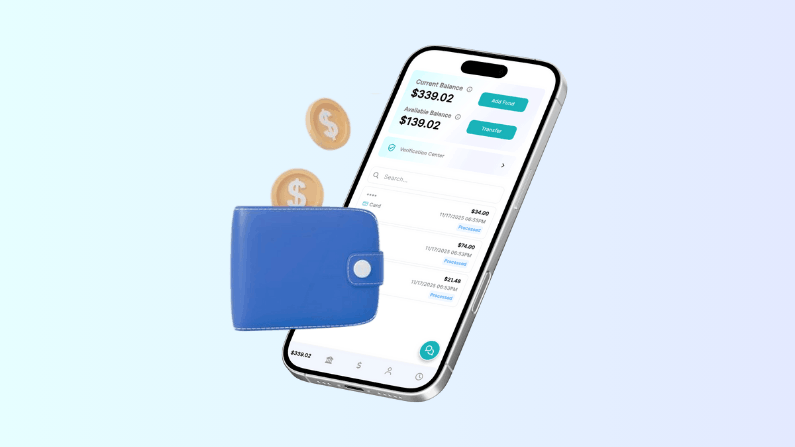
A digital wallet has become an important part of how people and businesses manage money online. Instead of relying only on bank transfers or cards for every transaction, many platforms now offer wallets that hold funds and allow instant payments.
For businesses, this approach simplifies daily payouts, vendor payments, and internal transfers. For individuals, it provides a quick and controlled way to send money without entering bank or card details every time.
In FiChecks, a digital wallet works as a stored balance that you can fund and use for instant payments. It does not store bank account or card details. Instead, you add funds to the wallet and use that balance to send money quickly.
What a Digital Wallet Means in FiChecks
When people hear the term digital wallet, they often think of apps that store card or bank details. FiChecks works differently.
In FiChecks, a digital wallet is a prepaid balance that you load with funds. Once the wallet is funded, you can use it to make payments instantly. This makes it useful for businesses that want fast payouts without waiting for bank processing times.
Because the wallet does not store bank or card details, it keeps things simple and reduces the need to share sensitive financial information.
How Digital Wallet Payments Work
Using a digital wallet in FiChecks is straightforward and easy to understand.
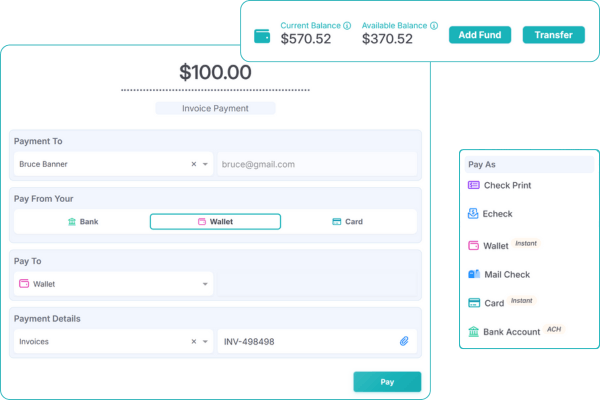
First, you add funds to your wallet using a supported payment method. Once the funds are available, you can use the wallet balance to send payments instantly.
You select the payment type, enter the recipient details, and confirm the payment. Since the money is already in your wallet, there is no waiting for banks to process the transaction. This makes the payment flow smooth and predictable.
This approach is especially helpful for businesses that make frequent payments and want more control over timing and cash flow.
Benefits of Using a Digital Wallet for Businesses
A digital wallet offers several practical advantages for businesses and finance teams.
Speed is one of the biggest benefits. Payments made from a wallet balance are instant, which helps businesses pay vendors, contractors, or customers without delays.
Convenience is another key advantage. Instead of entering bank or card details for every payment, you simply use your wallet balance.
Security is also improved. Since the wallet does not store bank or card credentials, there is less sensitive data involved in each transaction.
A wallet also helps with budgeting and control. Businesses can allocate a specific amount to the wallet and manage spending more clearly. This makes tracking and reconciliation easier.
Common Use Cases for Digital Wallets
Digital wallets are useful in many everyday business and personal scenarios.
Businesses often use wallet balances for vendor payments, contractor payouts, and customer refunds. Wallets are also helpful for internal transfers between departments or teams.
Individuals may use wallet funds for peer to peer payments or online purchases when they want a simple and fast payment option.
For platforms that handle high volumes of transactions, wallet based payments can reduce dependency on banks for every single transaction.
Digital Wallets and Other Online Payment Methods
While digital wallets are powerful, they are just one part of the broader online payment ecosystem. Businesses often need multiple ways to send money depending on the situation.
Checks are still widely used for many business payments. Today, checks can be created and managed online instead of being handwritten.
eChecks allow businesses to send checks digitally through email, which speeds up delivery and reduces manual work.
ACH payments are used for direct bank to bank transfers, especially for payroll and recurring payments.
Wire transfers are used for high value or urgent transactions that require fast settlement.
Card payments are common for online purchases and subscriptions.
Each method has its place, and modern businesses benefit from having flexible options.
How FiChecks Supports Multiple Ways to Send Money
FiChecks is designed to support a wide range of payment methods so businesses can choose what works best for each transaction.
With FiChecks, users can create checks online and print them instantly. They can send checks by email as eChecks or mail them through USPS or FedEx. Users can also make ACH payments, wire transfers, digital wallet payments, and card payments.
This flexibility allows businesses to manage all their payment workflows from one platform instead of using separate tools.
Why Businesses Are Adopting Wallet Based Payments
Wallet based payments are growing because they solve real operational challenges. Businesses want faster payouts, fewer delays, and better control over cash flow.
A digital wallet helps teams avoid waiting for bank processing times. It also reduces manual work and repetitive data entry, which can save time and reduce errors.
For finance teams, wallets provide clear visibility into available funds and outgoing payments, making reconciliation easier.
Digital Wallets in Everyday Finance Operations
In daily operations, a digital wallet can be used for many tasks.
Companies can fund the wallet at the start of the week or month and use it for regular payouts. This makes scheduling payments easier and reduces uncertainty.
Wallets are also helpful for platforms that handle refunds or micro payments, where speed and simplicity matter.
For startups and growing businesses, wallet based payments offer a modern way to manage money without complex banking processes.
Final Thoughts on Digital Wallets and Modern Payments
A digital wallet is a practical tool for storing funds and making instant payments. In FiChecks, the wallet acts as a prepaid balance that does not store bank or card details, making it simple and controlled.
When combined with other payment options like online checks, eChecks, ACH, wire transfers, and card payments, businesses get a complete payment toolkit in one place.
As companies look for faster and more flexible ways to move money, digital wallets are becoming a natural part of modern payment workflows. Businesses that adopt wallet based payments alongside other online payment methods can improve efficiency, reduce delays, and simplify financial operations.