
Introduction
International funds transfer has become a normal part of doing business and managing personal finances in a connected world. Companies work with global vendors, freelancers operate across borders, and families send money internationally more often than ever before.
What once felt slow and complicated is now much easier. With the right setup, sending money worldwide is quick and easy.
What is International Funds Transfer
International transfers move funds between different countries using interconnected banking systems.
At a basic level, the process connects the sender, the recipient, and the financial institutions that handle the transfer. Depending on the method, money may pass through intermediary systems before reaching its final destination.
International transfers include currency conversion and regulatory checks to ensure secure cross-border delivery.
How International Funds Transfer Works
Just enter the recipient’s name and bank details to get started. It’s a quick way to ensure your money gets exactly where it needs to go.
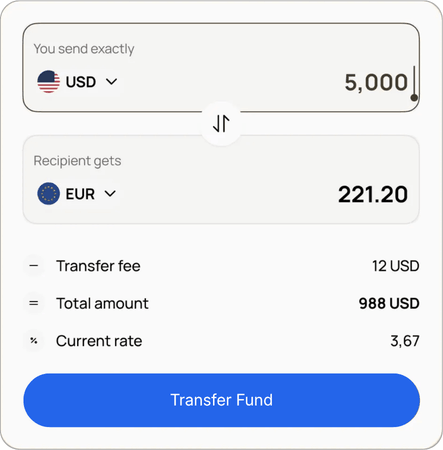
Then you choose how much to send and in which currency, and if it’s a different one, the system converts it using the current rate.
After you double-check the info, the transfer gets moving. The sender’s bank or payment platform processes the request and sends it through the appropriate network.
At times, the money moves through a couple of banks before it lands in the recipient’s account.
The recipient is then able to access the funds once the transfer is completed. Most platforms also share confirmation and tracking updates so both sides can follow the transfer.
Types of International Transfer Methods
Various international transfer methods exist to accommodate diverse transactional requirements.
Wire transfers are a solid, go-to choice for safely sending larger amounts to family or friends abroad.
Banks use global networks to securely move your money from one country to another.
Digital wallets facilitate expedited and efficient small-scale international transactions.
Card-based transfers provide another method, enabling users to remit funds via debit or credit instruments.
Selection depends on speed, cost, and transaction type.
Benefits of International Funds Transfer
International funds transfer makes it possible to operate beyond local markets.
It helps businesses grow globally by making it easy to pay teams and partners anywhere.
It gives you more flexibility to access and pay for resources globally without payment limits getting in the way.
It’s a simple way to take care of family abroad and handle your personal transfers.
Overall, it helps build stronger global connections and opens up new opportunities.
Common Use Cases
International funds transfer is needed in many everyday situations.
Businesses use it to pay overseas suppliers and handle cross border work.
Freelancers and remote workers get paid by clients in other countries.
Companies also use it to pay global teams and contractors.
People send money to family, pay education costs, or support expenses in other countries.
In all these cases, having a reliable way to transfer funds internationally is critical.
International Funds Transfer vs Domestic Transfers
Domestic transfers are usually quick and simple since they stay within the same system and currency.
International transfers take a few extra steps like currency exchange and checks, which can affect how fast they arrive and what they cost.
Local payments often finish in a few hours, while international ones may take longer depending on how you send them.
They can also be a bit more expensive because of exchange rates and fees.
Knowing this helps you choose the right way to send money in each situation.
Challenges and Considerations
There are a few important factors to keep in mind when handling international funds transfer.
Currency fluctuations determine the terminal value of the transfer, with minor rate variances exerting a disproportionate impact on high-volume transactions.
Transfer fees may vary depending on the method and the institutions involved.
Processing time can differ, especially if intermediary banks are part of the transaction.
Accuracy is critical. Incorrect recipient details can lead to delays or failed transfers.
Juristic compliance mandates are contingent upon specific national protocols and the aggregate fiscal scale of the transfer.
Being aware of these factors helps you avoid common issues.
Security and Reliability
Security is essential when transferring money internationally.
Banks and payment platforms confirm user identity so only authorized people can complete transactions.
Compliance checks are often included in the process, especially for cross-border payments. These checks help ensure that transfers meet regulatory standards.
Transaction monitoring systems help detect unusual activity and reduce the risk of fraud.
Digital records give you a clear history of payments, making it simple to track and keep records accurate.
With proper safeguards in place, international transfers can be handled with confidence.
FiChecks Integration
FiChecks keeps international transfers and other payments in one place, so managing them is easier and more flexible.
With FiChecks, users can create checks online and print them instantly when required. This is useful for situations where formal payment documentation is needed.
Send eChecks instantly to skip the mail and get people paid faster. It’s a simple way to save time and clear your to-do list.
If a physical check needs to be delivered, FiChecks handles it for you. Once you select the mail option, FiChecks prints the check, places it in an envelope, and sends it through USPS or FedEx to the recipient.
Whether you’re sending money down the street or across the globe, FiChecks handles everything from cards to digital wallets in one spot. It’s built to save you the hassle of switching apps so you can just get your payments done and get on with your day.
Inherent system flexibility facilitates multi-modal transaction processing within a singular interface, eliminating the requirement for cross-platform migration.
Conclusion
International money transfers are key to today’s economy, helping businesses grow globally and keeping families financially connected across borders.
International fund transfers necessitate greater procedural rigor than domestic transactions, though appropriate platforms facilitate a seamless and efficient process.
Platforms like FiChecks bring everything together by offering multiple payment options in one place. This helps users handle both local and international transactions with better control and efficiency.
Robust global fund management is critical in an increasingly interconnected landscape. Optimized transfer protocols enhance fiscal transparency and reduce the complexity inherent in transnational settlements.