
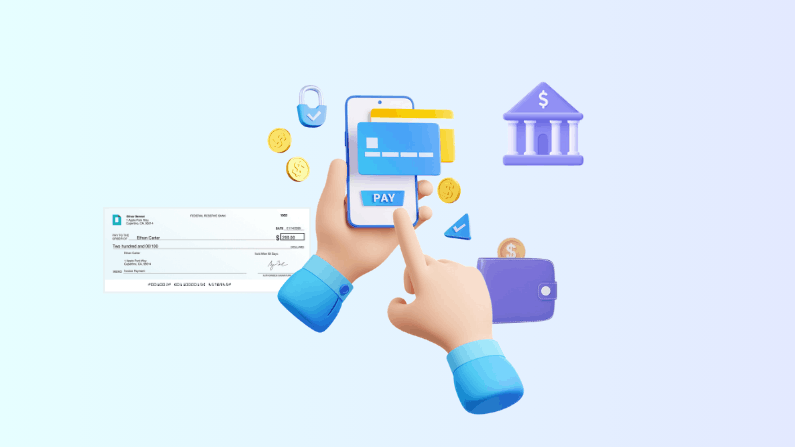
Online payments have become a part of daily life for both businesses and individuals. What used to take piles of paperwork, in-person visits, and long waits can now be done straight from a phone or laptop. Businesses want faster transactions, clear records, and flexible ways to pay vendors, partners, or employees. For individuals, simple tools that fit into a busy schedule while keeping control and peace of mind are key.
Online payments mean sending and receiving money online instead of using cash or checks. It’s not just about doing it faster – it also gives you more ways to pay or get paid, depending on what works best for you.
What Online Payment Really Means
Online payment isn’t just a single method. It includes many ways to send and receive money electronically, with each option designed for a specific need. This makes it easy to pick the payment method that works best for any situation.
Some payments still start with checks, but nowadays those checks are created and managed online. Others move straight between bank accounts or go through digital platforms that process transactions instantly. The idea is to make payments smoother, while keeping them reliable and easy to track.
Understanding these options helps businesses choose the payment method that fits best, instead of trying to make every transaction follow the same system.
Common Online Payment Methods Explained Simply
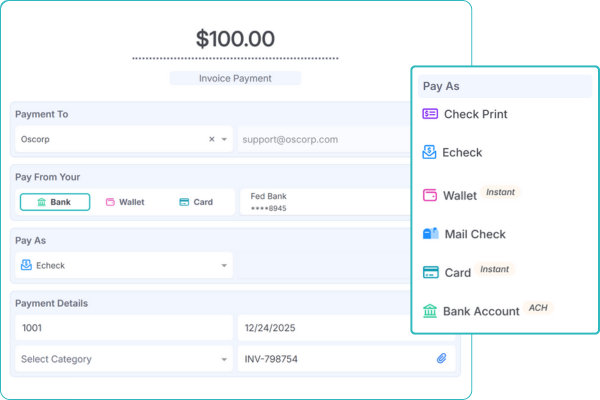
Many businesses still trust checks for their security, but that doesn’t mean they have to be a hassle. Modern digital tools take the “manual” out of the process, so you can skip the handwriting and the bank runs. It’s the same trusted way to pay, just much faster and easier. You can create a check online, print it right away, or send it digitally when possible. It keeps the process you’re used to while removing most of the manual work.
eChecks take things a step further. You can create these checks online and send them by email. The recipient can view, print, and deposit them just like a regular check. This works great when you need speed but still want the comfort of a familiar check process.
ACH payments move funds directly between bank accounts. They are widely used for payroll, recurring vendor payments, and subscriptions. ACH is known for consistency and lower processing costs, especially for high volume transactions.
Wire transfers are ideal for urgent or high-value payments. They let you transfer money quickly between banks, which makes them ideal for time-sensitive business deals or big purchases.
Digital wallet payments let you send money easily using your wallet balance or a linked bank account. They’re a simple, convenient way to pay for everyday purchases or send money to friends and family.
Card payments give you extra flexibility, especially when you need instant confirmation. Their wide acceptance and familiarity make them an easy choice for both personal and business use.
Why Businesses Benefit from Multiple Online Payment Options
Depending on just one payment method can slow you down and limit growth. Businesses deal with vendors, clients, and partners, each with their own preferred way to pay. Providing multiple online payment options helps keep transactions smooth and strengthens relationships.
One of the biggest benefits is speed. Online payments cut down the waiting time compared to traditional methods. Another big advantage is convenience. You can make payments from anywhere without dealing with paperwork.
Security gets a boost when payments go through trusted digital systems with built-in verification and tracking. Digital storage makes record keeping easier and improves reconciliation and reporting accuracy.
Flexibility is what brings it all together. Businesses can pick the right payment method for each transaction, rather than trying to fit everything into a single process.
Everyday Use Cases for Online Payment
Online payments play a role in nearly every part of a business. Businesses use online payments to pay vendors, issue refunds, manage payroll, and pay contractors. Finance teams rely on them to keep accurate records and ensure timely settlement.
People use online payments for rent, bills, or sending money to friends and family. Freelancers and small business owners rely on flexible options to receive payments from clients quickly and without any hassle.
Being able to choose the payment method based on urgency, cost, or the recipient’s preference makes online payment systems truly practical for everyday use.
How FiChecks Supports Modern Online Payment Needs
FiChecks combines multiple payment methods into one platform, letting users pick the best option for each transaction. Rather than juggling different tools, businesses can handle everything from a single, convenient system.
With FiChecks, you can create checks online and print them instantly whenever you need a physical copy. You can also send checks by email as eChecks for faster delivery. And if you need to mail them, FiChecks lets you send checks through USPS or FedEx right from the platform.
FiChecks does more than just checks. It also supports ACH payments, wire transfers, digital wallets, and card payments. With all these options in one place, businesses can manage every type of payment smoothly without interrupting their workflow.
The focus is on giving users control and clarity rather than pushing one payment method over another.
Online Payment as a Smarter Way Forward
Online payment is more than just a convenience. It has become a key part of managing finances efficiently.
With platforms like FiChecks, both businesses and individuals can send money in the way that suits them best. Whether it’s a printed check, an emailed eCheck, or a direct digital transfer, modern tools make online payments simple, secure, and easy to manage.
Choosing the right online payment approach helps organizations move forward with confidence in a fast changing financial landscape.