

Introduction
Real-time payments are changing the way money moves in today’s world. Waiting hours or even days for funds to arrive is slowly becoming a thing of the past. Whether you are running a business or handling personal finances, the expectation now is simple. Payments should be fast, reliable, and available when needed.
Whether you’re running a business or just trying to pay a friend, getting your hands on your money right away takes the stress out of waiting. Once you see how these instant payments work, you can stop worrying about “pending” statuses and just get on with your day.
What are Real-Time Payments
Real-time payments are basically a digital handoff that happens in a heartbeat. The moment you hit send, the system confirms you’re good for it and drops the cash into the other person’s account before you can even look away from your screen.
While old-school systems sleep on weekends and holidays, this one stays up with you. It doesn’t care about “business hours,” so you can move your money whenever you want, even in the middle of a Sunday or a holiday.
It’s all about beating the clock. Instead of sitting around for days waiting for a transfer to clear, the money lands pretty much the second you hit send, saving you a massive headache when you’re down to the wire.
How Real-Time Payments Work
The process behind real-time payments is designed to be quick but secure.
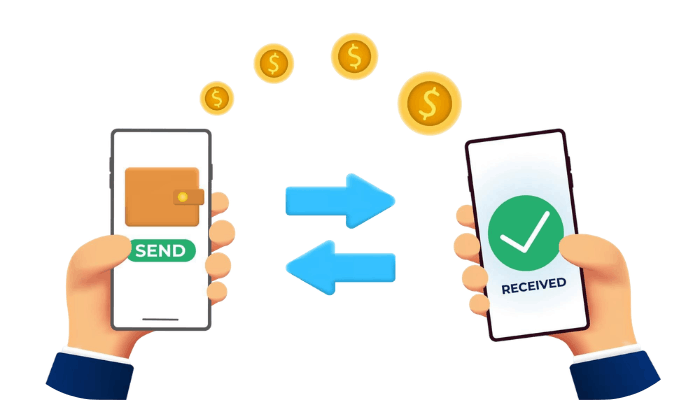
The second you tap pay, your app takes a quick peek at your wallet to make sure you’ve actually got the scratch before it lets the cash fly.
Next, the system gives the details a quick once-over to make sure the person you’re paying is actually who they say they are and that everything is totally above board.
As soon as the green light flashes, the cash zooms over and lands in the other person’s account. Their bank catches it instantly, so they can start spending it before you even put your phone away.
The sub-second execution of the end-to-end transaction cycle distinguishes real-time payment architectures from the latent processing characteristic of legacy financial systems.
Benefits of Real-Time Payments
One of the biggest advantages of real-time payments is instant settlement. Businesses no longer have to wait for funds to clear, which improves cash flow and financial planning.
It also enhances the customer experience. Whether it is a refund, a payout, or a simple transfer, people appreciate receiving money without delays.
You also get better control over your money. Because transfers happen instantly, you never have to guess when the funds will show up.
Real-time payments settle almost instantly, so you can stop chasing confirmations and checking your balance to see if the money arrived.
Common Use Cases
Real-time payments are useful in a wide range of situations.
Emergency payments are one of the most common examples. When funds are needed urgently, instant transfers can make a significant difference.
Gig economy payouts also benefit from real time processing. Freelancers and contract workers can receive payments as soon as their work is completed.
Online purchases and bill payments are becoming faster and more convenient with instant transfers. This reduces waiting time and improves overall efficiency.
Paying your friends or family is a breeze since the money lands in their pocket the second you hit send. No more awkward “did you get it yet” texts or waiting days to settle up.
Real-Time Payments vs Traditional Payment Methods
When you put instant payments next to the old-fashioned way, the difference is night and day.
ACH payments are dependable and cheap, but since they take a few days to clear, they’re better for regular bills.
Wire transfers are faster but often come with higher fees and may still depend on banking hours.
The requirement for manual intervention and the standard clearing timeline render checks an inefficient instrument for urgent financial settlement.
Real-time payments provide significant speed and convenience, yet the selection of an optimal payment instrument continues to be determined by specific situational requirements.
Challenges and Considerations
Despite their advantages, real-time payments come with a few challenges.
Transaction limits are a significant consideration, particularly for high-value transfers. Many systems impose restrictions that prevent the instantaneous processing of large-scale payments.
It really comes down to where you live and who you bank with. Even though everyone is moving this way, some banks are still dragging their feet and haven’t quite caught up to the instant world yet.
You have to be careful because there is no “undo” button once you hit send. Since the money moves in a heartbeat, a tiny typo with the account details can turn into a real headache to fix.
Proper infrastructure is mandatory. Businesses must ensure their technical systems are equipped to process real-time transactions without operational failure.
Security and Reliability
Security plays a major role in real-time payments.
Systems utilize multi-factor authentication, including biometric verification and secure passcodes, to validate user identity. These protocols ensure that transaction initiation is strictly restricted to authorized individuals.
Fraud detection tools monitor transactions in real time to identify unusual activity. This helps prevent unauthorized transfers and protects users.
Maintaining precise records is critical. Although payments occur instantly, thorough documentation ensures transparency and facilitates the efficient resolution of any potential issues.
When you have the right security in place, moving money in real time is just as safe as it is fast.
FiChecks Integration
Keeping track of different ways to pay can be a total headache. FiChecks makes life easier by bringing all your payment options together in one simple spot.
FiChecks lets you create and print checks the moment you need them. You can skip the post office by sending eChecks via email, or let us handle the stamps and delivery through USPS or FedEx.
Beyond the usual stuff, FiChecks handles everything from old-school wires and bank transfers to your digital wallet and card swipes. This allows users to handle a wide range of financial needs from one place.
By combining traditional and modern payment methods, FiChecks gives businesses and individuals the flexibility to choose what works best for each situation. Whether it is a scheduled payment or a fast transaction, everything can be managed efficiently.
Conclusion
Real-time payments are changing the game by moving money instantly. Whether you’re running a business or just sending cash to a friend, they give you the speed and control you actually need to keep life moving.
While the old ways still have their place, everyone is moving toward instant transfers. Picking the right mix of tools keeps things moving fast so you aren’t stuck waiting for your own money.
Tools like FiChecks take the headache out of the process by putting all your payment options in one spot. When you have everything in one place, managing your money feels a lot faster, simpler, and more reliable.