
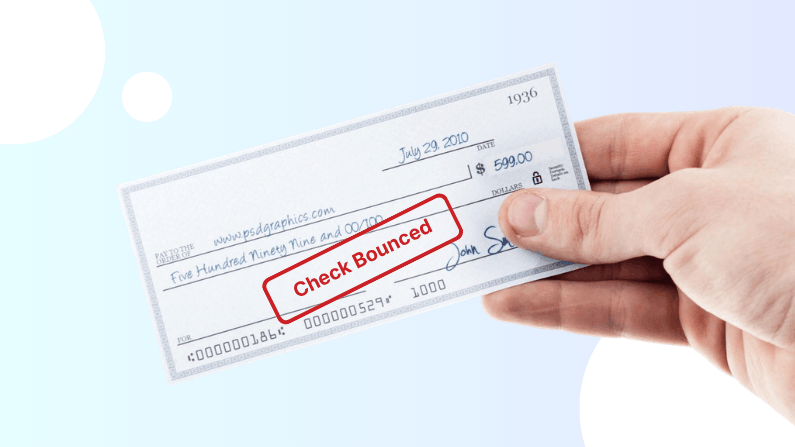
eChecks or online checks are generally considered safe, but there’s an issue of failed transactions and fraud associated with the category. The rate of bounced checks is still high, with over 60% of operational businesses reporting a scam or fraud related to their eCheck cash-ins.
When a check bounces, there’s still a transaction fee incurred, which is high. These failed transaction costs can directly affect your business. This is where FiChecks’ dedicated design and strategy to manage the successful recovery steps for check bounces comes into play.
Issues Related to a Check Failure
It’s common for businesses to face the issue of check payment failures. Though the factors creating a check payment failure vary, the consequences of the bounces are many from a business perspective. Some of the issues related to major check bounces are as follows:
- Disruption in financial operations – The financial operations of the organization will come to a halt, causing manual labour to step in. It will ask for the clearance of invoices with an engaging tracking and follow-up procedure.
- Legal troubles – Legal action may follow in case of bounced checks, creating space for a strategic procedure attached to resolution.
- High banking rates – Both business parties of the transaction will have to honour higher banking rates and fees when an online check bounces due to various reasons.
- Bounced notices – In times of check bouncing without honouring the contractual agreement, banks will create sanctions on the liable parties in the form of notices or memos.
- Revenue loss – A check bounce will result in revenue loss for businesses, and the immediate effects could be felt on all aspects of the operations model.
- Administrative hurdles – A bounced check will directly reflect on the administrative process of an organization and could create trouble in the long run if the issue is repeated multiple times.
Recovery Steps for Businesses in Case of Check Failure
A business needs to recover from a failed check using strategic measures to hop back on the payments flow and management. A few recovery steps to learn in this regard include:
- Active communication – Reaching out to partner channels with a prompt communication channel regarding the bouncing of a check will be really helpful to resolve the issue at hand.
- Attempts for a successful transaction – Retrying transaction attempts to ensure the fulfillment of a check payment could be useful to resolve the issues if they arose due to any technical errors.
- Legal formalities and procedure – This is usually a final resort to rectify the check payment errors. It might serve as the best resolution in B2B transaction deals and check failures.
- Utilization of automated notifications – Automated and real-time notifications could be warning signals to understand the situation of a check payment and the potential next steps to embrace. It can help a business to create a portal for check-related reminders.
- Authorized requests for alternative payments – If the concerned parties can create access to formal requests to initiate alternative payment methods, then it becomes easier to overcome the bouncing of checks.
- Ensure prevention in future scenarios – One of the proactive steps that businesses can undertake is to learn from past mistakes and enable preventive measures in the future to avoid and challenge check bounces/failures.
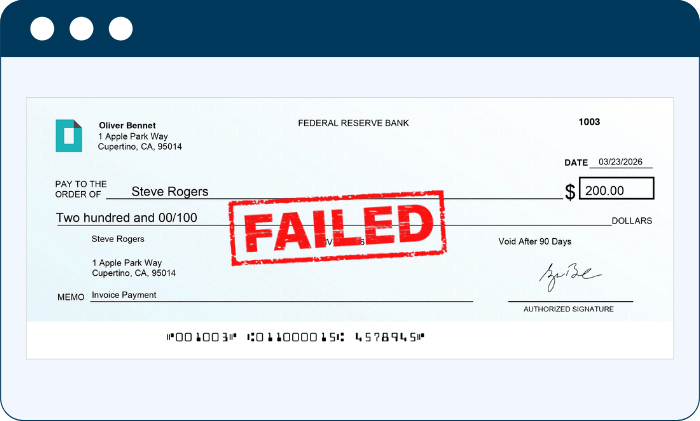
Steps to Prevent Check Failures in an Organizational Setting
The saying ‘prevention is better than cure’ applies well to eCheck problems. In a business organization’s workflow, it is important to tackle and overcome all check-related issues and bounces to keep the number of occurrences at a minimum. A few steps that businesses can take to stay protected in this case are:
- Active verification techniques – One of the strictest measures that businesses should never compromise is the level of active verification and assistance. All profiles should be monitored with the collection of details, including history and perceived risk.
- Segmentation of risk-based profiles – Customers should be divided into high, low, and medium risk levels based on their past transaction activities. It will help businesses go with the flow in terms of handling check payments without getting trapped in fraud or deception.
- Electronic payment implementation – By enabling electronic fund transfers, such as with ACH rails, businesses can ensure optimum support for their check payment services.
- Regular audit checks – When a business conducts regular audits and compliance checks related to online check payments, it clears the way for better functioning of business transactions.
- Internal control functions – This includes a set of preventive strategies and measures such as dual signatures, bank reconciliation processes, duplicate payment supervision, and reduction of physical check activities.
- Positive payment environment – The overall payment environment of the business should be positive, paving the way for essential tactics like safe handling, automated auditory tips, secure storage and transfer options, and reconciliation of payment flow. The education and awareness of businesses related to payment flow and support will be higher in this scenario.
FiChecks: How to Build a Check Payment Strategy that Never Fails
FiChecks offers a safe and secure eChecks experience for businesses, irrespective of the required volumes and financial strategy involved. The platform ensures the creation, mailing, and printing of checks using electronic transfers and authentic verification checks. With FiChecks, you have a simplified eCheck management model at your disposal. It helps you build a reliable and hassle-free check management process with a focus on handling ACH transactions without fail.
Frequently Asked Questions
What happens when a check payment fails or bounces?
When a check payment fails, the bank rejects the transaction due to insufficient funds, incorrect account details, or account closure, which can lead to fees and cash flow disruption. FiChecks helps businesses manage bounced check recovery efficiently through automated notifications and secure payment processing.
How can businesses recover money from a bounced check quickly?
Businesses can recover funds by contacting the customer immediately, retrying the transaction, requesting an alternative payment method, or initiating formal recovery procedures. FiChecks streamlines the recovery process by enabling automated retries and structured payment recovery workflows.
What are the most common causes of eCheck or online check payment failures?
The most common causes include insufficient funds, incorrect banking information, fraud attempts, expired accounts, and bank processing errors. FiChecks reduces payment failures by using verification systems and secure ACH-based transaction validation.
How can businesses prevent check payment failures and reduce fraud risk?
Businesses can prevent failures by implementing customer verification, monitoring transactions, using secure electronic payment systems, and conducting regular financial audits. FiChecks strengthens payment reliability with advanced verification controls and automated fraud prevention tools.
| Feature | Traditional Check Payments | FiChecks Advantage |
|---|---|---|
| Processing speed | Slow | Fast and instant |
| Risk of failure | High | Low or minimal |
| Validation techniques | Limited | Advanced |
| Compliance level | Manual | Built-in integrations and support |